Chronica Minora
The river valleys Esla, Órbigo and Tera were from the earliest times, the subject of intense and continuous settlement, which resulted in the development of a variety of settlements. Are numerous archaeological sites identified in the region of the Valles de Benavente, with cultures covering a broad chronological period: the Paleolithic, the Metal Age, the Roman, medieval, etc. This highlights the favorable natural conditions of this territory since ancient times for the development of agricultural activities and the role of rivers as hubs of economic development and communications.
 excavation campaigns Benavente undertaken during the eighties of last century revealed the existence in the upper part of the city in a defensive occupation for the First Iron Age. The site, located on the slopes of the station called, was located west of the village, bounded by the streets The Sinogan, Mirador de la Sinogan and the slopes of the station. In this work we must add further archaeological interventions made as a result of building works and construction costs them an underground car park in the area of \u200b\u200bthe Old Mota. Recent surveys to determine to a greater extension of the original settlement, which the first fortified settlement and acquire considerable dimensions.
not until the Middle Ages when we document a settlement of some entity. The first written records date back to the second decade of the twelfth century, circa 1115. In them, the population is called "Malgrado" and is identified either as a village, fort and fortress, what we're talking about a military enclave nested function of the territory. In this context, our village will be involved in the process of recruitment and organization of territories taken by the monarchs of León to the length and breadth of the kingdom.
 The restocking of "Malgrado" was conducted by the King of Leon Ferdinand II, probably in 1164. On this date should have granted the first charter of which are known only some details. However, in 1167 the same monarch made a second populated with a renewal of the contents of the forum. This second edition, popularly known as Town Charter, is the crown jewel of the Municipal Archives. In this arrangement Fernando II entrusts the work of organization and distribution of estates to a select group of 21 people. The heads of the company will be the count of Urgell and the noble Fernando Rodríguez. Anyone who came to live in the village and build it as a home acquired resident status and was therefore entitled to participate in the distribution of land and inheritance. In addition, the neighborhood meant exemption from payment of various taxes and enjoy other privileges.
Following the actual intervention, the former Malgrado went on to take the final name of Benavente (most likely referring to the good winds). Thereafter he met a period of great expansion that led to achieve notoriety in the political context of the kingdom. In 1181 Fernando II held here an important concilium , which was followed by the announcement of cuts by Alfonso IX in 1202 and 1228. In 1230 Benavente consumed in final drive of the kingdoms of Castile, through agreement between Fernando III and his sister Sancha and Dulce.
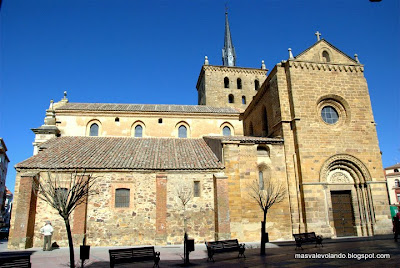
During the twelfth and thirteenth centuries, a castle stands, it extends the village, is surrounded by a wall and build most of the parishes and churches (including St. John's Roman Market and Santa Maria del Quicksilver) . In the thirteenth century several Castilian monarchs as Alfonso X and Sancho IV, contributed to the development of the town through the granting of privileges and favors of various kinds. Alfonso X in 1254 gave a free exhibition of 15 days around the Easter holidays, while Sancho IV promoted in 1285 a new populated by a letter with several franchises.
 In the fourteenth century, as with the vast majority of people in their environment Leon, Benavente underwent a period of crisis manifested in a significant reduction in your neighborhood and your business. The need to address these and other problems prompted the King Henry II to the grant of a privilege in 1370 by exempting the town from paying taxes for ten years.
Soon after, Benavente temporarily lost their status as property of the Crown. In 1374, within a general context of expanding and strengthening of certain noble lineages, Benavente was delivered, as a duchy for his son Henry II Fadrique natural fruit of their relationship with Beatriz Ponce de Leon and Aragon xeric. During this tumultuous period, the village had to suffer in 1387, a two-month siege by the Anglo-Portuguese mixed troops, led by the Duke of Lancaster. The attackers failed to achieve their goal of conquering the city, but left behind a landscape of ruin and desolation.
Following the disgrace and death in custody of Don Frederic, in 1394, the title of Benavente duchy reverted to the crown, but the process was unstoppable lordships. In 1398 King Henry III granted the town as head of a large estate to Don Juan Alfonso Pimentel, noble of Portuguese origin living in Castile. This creates a county associated with one of the most powerful lineages of the kingdom that was to continue until well into the nineteenth century.
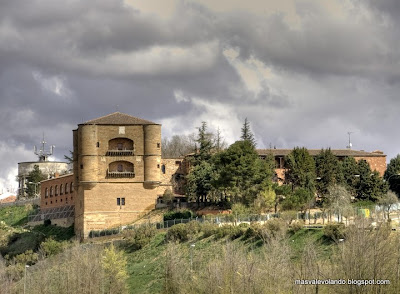
The XV and XVI are heyday Benavente County. Collaboration and continuing support of the counts of the kings is rewarded with all sorts of grants and rights that increase their holdings. The result of all this is the sponsorship and patronage exercised by Pimentel on the town. Is founded Mercy Hospital for the relief of the poor and pilgrims, stands a new fortress-palace, repeatedly praised by travelers and writers, and establishes a trust on the monastery of San Francisco, home to the family vault.
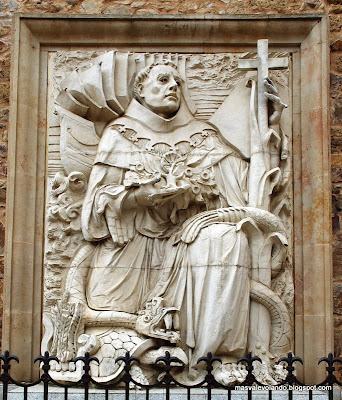 In relation to the work of evangelization in the American territory should be noted the figure of Fray Toribio de Benavente Paredes or, Franciscan monk who spent much of his life to understanding the culture and traditions indigenous population. His life was characterized by great simplicity, both internal and external. The term "Motolinia" with which he was also known, is an Indian word alluding to poverty in their dress. Fray Toribio de Motolinía various treaties left writings historical and ethnographic, in which Indians defended the often poor treatment received from the settlers. Between 1530 and 1531 participated in the founding of the city of Puebla de Zaragoza, also known as Puebla de los Angeles (Mexico).
During the seventeenth century the social and economic landscape of the town seems to have suffered in some respects. From the demographic point of view can see a prolonged decline contingent of neighbors. Only toward the end of the century begins to detect a certain recovery. The causes must be sought in the general adverse economic circumstances that affected the country. Municipal records council reveal some of their symptoms: poor harvests, rising prices, soldiers continue cams, etc.
From 1640 the village was affected by the revolt of Portugal, whose outcome would lead to the neighboring country's independence in 1668. Although most outstanding feats of arms took place in the bordering territories, many of them were under the jurisdiction of the manor Pimentel, and La Puebla de Sanabria. Benavente came up the consequences of that conflict. Thus, the castle was an arsenal for this race. In the town formed an army under the command of Count as captain Juan Francisco Pimentel general and for the year of 1641 was used bronze artillery was in the fortress.
Throughout the eighteenth century felt the echoes of the Enlightenment. Characters relevant to this emerging cultural environment are the Countess-Duchess Maria Josefa Pimentel (1752-1834), scholar and historian José Ledo del Pozo (1753 -1788) and the Bishop of Oviedo, Agustin Gonzalez Prancing (1709-1791), who spent long periods in his mansion in the Rue de la Rua and was buried in St. Mary's Quicksilver. The most dynamic sectors of local life promoting the establishment of the Economic Society of Friends Benavente country. Its main purpose was to promote economic development in the region.
In the final stage of the Old Regime Benavente was involved in the clashes arising from the War of Independence. Between December 1808 and January 1809 the villa was occupied first by the English army under the command of General Moore, who was retiring to La Coruña, and immediately after the large French army commanded by Napoleon himself, who was in persecution. The fort was looted and burned, and others equally deplorable episodes were produced in monasteries, hospitals and other buildings.
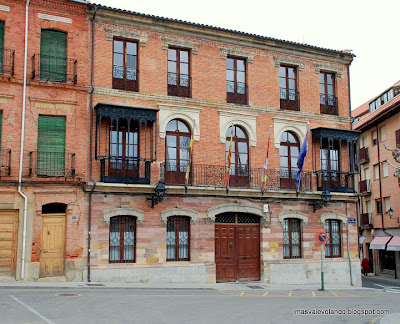
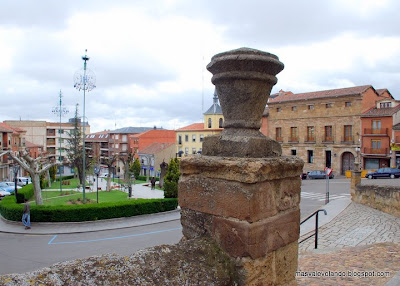
Images: 1. View of the Castle from the River Don Felipe, 2. South facade of Santa Maria del Quicksilver 3. View of the Plaza del Grano, 4. Monument to Fray Toribio de Motolinía and 5. Town Hall.
The river valleys Esla, Órbigo and Tera were from the earliest times, the subject of intense and continuous settlement, which resulted in the development of a variety of settlements. Are numerous archaeological sites identified in the region of the Valles de Benavente, with cultures covering a broad chronological period: the Paleolithic, the Metal Age, the Roman, medieval, etc. This highlights the favorable natural conditions of this territory since ancient times for the development of agricultural activities and the role of rivers as hubs of economic development and communications.

not until the Middle Ages when we document a settlement of some entity. The first written records date back to the second decade of the twelfth century, circa 1115. In them, the population is called "Malgrado" and is identified either as a village, fort and fortress, what we're talking about a military enclave nested function of the territory. In this context, our village will be involved in the process of recruitment and organization of territories taken by the monarchs of León to the length and breadth of the kingdom.

Following the actual intervention, the former Malgrado went on to take the final name of Benavente (most likely referring to the good winds). Thereafter he met a period of great expansion that led to achieve notoriety in the political context of the kingdom. In 1181 Fernando II held here an important concilium , which was followed by the announcement of cuts by Alfonso IX in 1202 and 1228. In 1230 Benavente consumed in final drive of the kingdoms of Castile, through agreement between Fernando III and his sister Sancha and Dulce.
During the twelfth and thirteenth centuries, a castle stands, it extends the village, is surrounded by a wall and build most of the parishes and churches (including St. John's Roman Market and Santa Maria del Quicksilver) . In the thirteenth century several Castilian monarchs as Alfonso X and Sancho IV, contributed to the development of the town through the granting of privileges and favors of various kinds. Alfonso X in 1254 gave a free exhibition of 15 days around the Easter holidays, while Sancho IV promoted in 1285 a new populated by a letter with several franchises.

Soon after, Benavente temporarily lost their status as property of the Crown. In 1374, within a general context of expanding and strengthening of certain noble lineages, Benavente was delivered, as a duchy for his son Henry II Fadrique natural fruit of their relationship with Beatriz Ponce de Leon and Aragon xeric. During this tumultuous period, the village had to suffer in 1387, a two-month siege by the Anglo-Portuguese mixed troops, led by the Duke of Lancaster. The attackers failed to achieve their goal of conquering the city, but left behind a landscape of ruin and desolation.
Following the disgrace and death in custody of Don Frederic, in 1394, the title of Benavente duchy reverted to the crown, but the process was unstoppable lordships. In 1398 King Henry III granted the town as head of a large estate to Don Juan Alfonso Pimentel, noble of Portuguese origin living in Castile. This creates a county associated with one of the most powerful lineages of the kingdom that was to continue until well into the nineteenth century.
The XV and XVI are heyday Benavente County. Collaboration and continuing support of the counts of the kings is rewarded with all sorts of grants and rights that increase their holdings. The result of all this is the sponsorship and patronage exercised by Pimentel on the town. Is founded Mercy Hospital for the relief of the poor and pilgrims, stands a new fortress-palace, repeatedly praised by travelers and writers, and establishes a trust on the monastery of San Francisco, home to the family vault.

During the seventeenth century the social and economic landscape of the town seems to have suffered in some respects. From the demographic point of view can see a prolonged decline contingent of neighbors. Only toward the end of the century begins to detect a certain recovery. The causes must be sought in the general adverse economic circumstances that affected the country. Municipal records council reveal some of their symptoms: poor harvests, rising prices, soldiers continue cams, etc.
From 1640 the village was affected by the revolt of Portugal, whose outcome would lead to the neighboring country's independence in 1668. Although most outstanding feats of arms took place in the bordering territories, many of them were under the jurisdiction of the manor Pimentel, and La Puebla de Sanabria. Benavente came up the consequences of that conflict. Thus, the castle was an arsenal for this race. In the town formed an army under the command of Count as captain Juan Francisco Pimentel general and for the year of 1641 was used bronze artillery was in the fortress.
Throughout the eighteenth century felt the echoes of the Enlightenment. Characters relevant to this emerging cultural environment are the Countess-Duchess Maria Josefa Pimentel (1752-1834), scholar and historian José Ledo del Pozo (1753 -1788) and the Bishop of Oviedo, Agustin Gonzalez Prancing (1709-1791), who spent long periods in his mansion in the Rue de la Rua and was buried in St. Mary's Quicksilver. The most dynamic sectors of local life promoting the establishment of the Economic Society of Friends Benavente country. Its main purpose was to promote economic development in the region.
In the final stage of the Old Regime Benavente was involved in the clashes arising from the War of Independence. Between December 1808 and January 1809 the villa was occupied first by the English army under the command of General Moore, who was retiring to La Coruña, and immediately after the large French army commanded by Napoleon himself, who was in persecution. The fort was looted and burned, and others equally deplorable episodes were produced in monasteries, hospitals and other buildings.

The nineteenth century is largely determined by the vagaries of national politics and the consequences of the confiscation. The hardest hit were the monasteries of San Francisco, Santo Domingo and San Jerónimo. They all went out of convent life and factories began a slow but inexorable decline until their complete disappearance. During the last years of the century the railway works develop Plasencia-Astorga, whose official opening was celebrated with great popular enthusiasm June 21, 1896.
The next century begins with the demolition of the castle and walled enclosure loss. In 1929 Alfonso XIII granted Benavente the title of city, an initiative that, despite its unquestionable value as evidence, did not have too much impact on social and economic life. During the 60 and 70, the prevailing development thread, you lose a significant part of the architectural heritage (churches of San Andrés, San Nicolas, Santa Maria de Renews, and the monasteries of Sancti Spiritus, Santa Clara and San Bernardo).
end of this century witnessed a new momentum and a large population of urban spatial development. Key elements of this growth must be found now in the construction of new highways, the Transportation Center and the role of the city as a logistical and communications, all without having never lost his vocation as head of the region and the traditional weight of its fairs and markets. Images: 1. View of the Castle from the River Don Felipe, 2. South facade of Santa Maria del Quicksilver 3. View of the Plaza del Grano, 4. Monument to Fray Toribio de Motolinía and 5. Town Hall.


