Chronica Minora
The text published in this article corresponds to one of Ordinances Villa de Benavente seventeenth century contained in a manuscript kept in the Municipal Archives. It may seem a minor issue but for which there is an economic background which gives it special significance for the governance of the town. It is the prohibition of work and selling goods on the holy days. It could also be struck out as superfluous and unnecessary, as a general prohibition observed for centuries by the Christian church. There are numerous legal texts from the Middle Ages insist on this point as well as the constitutions and synods of an ecclesiastical nature.

In Benavente breach of the rule appears to be common in the mid-seventeenth century, with its attendant consequences for the spiritual and temporal neighbors. The concern of the council insists, of course, in the latter, with special attention to the guardianship and protection of the business. The sale of goods at parties recognized by the Church, local festivals and in processions. It is also prohibited any activity that could be considered work, including housework, fetching water, firewood, plowing vines, cultivate the land, etc.
neighbors are caught in flagrant breach penalties to a fine of 100 coppers. This reveals a constant throughout the various texts collected in this manuscript: the disappearance of corporal punishment systems so common in medieval and replaced by financial compensation. This is a clear indication of changes in customs and mentalities, and a conception of law much more in tune with the times. Nor do we find other ways to present remission of sentence previous benaventanos in other jurisdictions, as was the embarrassing exposure of the offender and their goods on the roll, or any of the corridors and plazas of the town.

As usual, the amount of the fine is shared between the complainant and the council, requiring a witness to confirm the reported conduct. In the event of default the attachment of a garment, while insolvent neighbors must meet three days in prison.
But behind the prohibition of work on public holidays there are other much more worldly motivations. This is, of course, to avoid unfair competition especially among the artisans and merchants, to encourage attendance at religious services and holiday celebrations of the community to control and organize the supply of the town and, not least, to ensure proper monitoring of treatment by the commercial Concejil institution. Obviously a standard
as generic as it was subject to various exceptions and qualifications. For example, consumption of bread and fresh fruit, the sale is allowed on holidays after Mass at the Plaza de Santa Maria del Quicksilver. The meat should be sold, however, before the conclusion of the Mass, while the bartenders must await completion of the church service for their establishments open to the public. Zamora, in his Ordinances of the parties to be saved, also allowed the sale of certain dairy products, "because things of bodily maintenance can not be excuse to sell in those days."
Interestingly 
water, basic need, not on holidays Benavente hauled in by neighbors, perhaps to preserve the activity of the water carriers on other days. Fall outside these regulations travelers and walkers, which can be supplied without any limitation at any time. The role of the village and crossroads, and obligatory place in important economic and trade flows is above any local restriction.
The full text of the ordinance is as follows: Ordered
ç to not work on holidays or stores open
ç to not work on holidays or stores open
ordering and orders for some people, residents of this town, not fearing God our Lord and in danger of their souls and consciences, to make and send in their Cassar and out of them some work and work on holy days Pasqual Sunday and other holidays that our Yglesias holy Mother commanded to keep, and sell their merchandize in which there is much scandal and Occasion of PECC, any person to make or send their children, servants or other persons having in their Cassas work or any work or fetch water or firewood, or farm wineries, or land, or other no work, no work which are prohibited by the church, at any day from Sunday, nor of our Lady the Blessed Virgin, Easter or other holidays that are saving the provision from the Church, constitution of this diocese or by vote of this town, nor in time of their processions.
 Under penalty than otherwise and be punished hiziere incurred a penalty of one hundred maravedis, for which the MetaD I will denounce and accuse the other half of the expenditure and own this town, and there being no complaint or being a person of the regiment or having charge of justice, is worth all of the expenditure and own this town by the quale can take clothes out and the guilty, and vaste for testing a witness who is declared and two and say their vows and declaration of the party, being cited the acussado or acussados \u200b\u200band this garment is sold and shot a third day as you take and make payment of such penalty and costs otherwise briefly without trial, and if such person accused and blamed it may not have to pay and no garment shall find that this presso three days and nights in the public jail of this town and not loose it to be complied with before that time salba if these hundred maravedis pay the penalty and that penalty is understood that although in a cassa will encounter more people working quel owns it.

Iten, which in those days, nor in any of them, none of the shopkeepers in this town is dared to open their shops or sell any merchandize so the the death penalty, skeptical that the baked bread and fruit can be sold after the largest Mass in church over Welcomes Our Lady of this town.
Iten, that no butcher or butcher can send any meat or consents Pessar holidays in store, from which is piped to mass higher in the said church Our Lady of the Welcomes and forth, failing which each butcher or butcher that pessare and the requirement to do so or'll send or agrees to incur Pessar maravedis hundred penalty, applied half for themselves and those expenses that Villa and the other half for the accused and acussador. And so the grief that can not tanpoco Pessar the day before, but after that it may ring a vespers in the said church of Our Lady of greater Quicksilver, and splitting, walkers can be given and the said meat Pessar Whosoever time and time of such festivals as their Cassas of such butchers.

Iten, which none of these holidays the person who sells wine in this town none of them do not put in his taverna Messer ensign or tablecloths to eat or eat there consent to any person until they leave higher missa said Church of Our Lady of Quicksilver or where such person had his tavern and whatever parishioner, and walkers can be given wine in the Drop In those days, and those against it that they be paid suso another hundred maravedis penalty in the form that spread.
Iten, am bringing not send or bring their servants or any other person in any of the holidays any water for their Cassar, lest they be punished for ever in sorrow than sixty maravedis and wastage of the pitchers and that the llebaren vassija, applied as such.
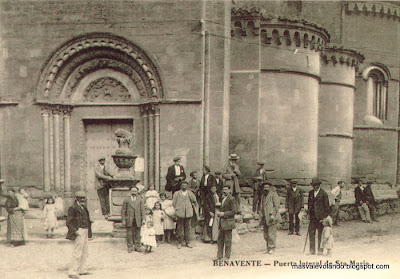
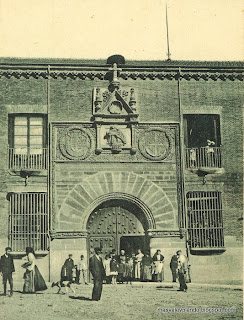
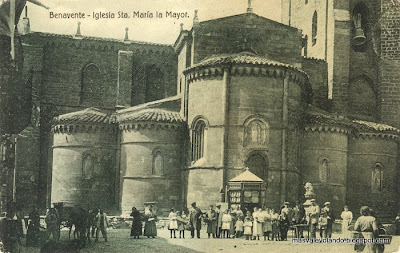
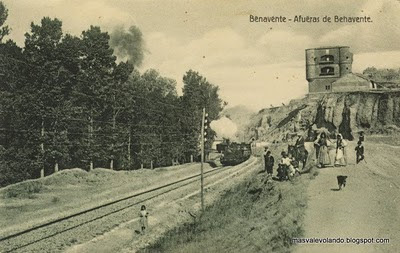
Images: Different views on postcards Benavente customs of the early twentieth century. 1. Mota rides high, 2. Side door of Santa Maria, 3. Mercy Hospital, 4. Church of Santa Maria Maggiore and 5. Benavente outside.
Images: Different views on postcards Benavente customs of the early twentieth century. 1. Mota rides high, 2. Side door of Santa Maria, 3. Mercy Hospital, 4. Church of Santa Maria Maggiore and 5. Benavente outside.

