Chronicle
Desolation Valley Vidriales
one of the northern territories of interest Zamora awake to the knowledge of the medieval settlement. In Roman history known, and probably, Visigoths, add an interesting episode about early medieval monasteries of Haggai and Castroferrol.
This article aims to provide an approximation of a small monastery nestled in the heart of this valley. This is the monastery of San Salvador de Villaverde de Vidriales. A foundation is almost forgotten today, but it certainly has a turbulent history and evocative. Its domain assets
should not exceed more than occasionally the contours of this narrow valley, Zamora. However, major institutions such as Monastery Sahagun, the French Cluny, or representatives of the most exalted lineage of the kingdom, as Pimentel, fix your attention on this small place of worship.
This article aims to provide an approximation of a small monastery nestled in the heart of this valley. This is the monastery of San Salvador de Villaverde de Vidriales. A foundation is almost forgotten today, but it certainly has a turbulent history and evocative. Its domain assets
should not exceed more than occasionally the contours of this narrow valley, Zamora. However, major institutions such as Monastery Sahagun, the French Cluny, or representatives of the most exalted lineage of the kingdom, as Pimentel, fix your attention on this small place of worship.

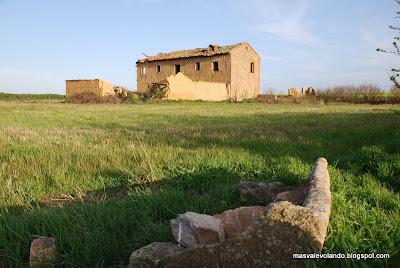
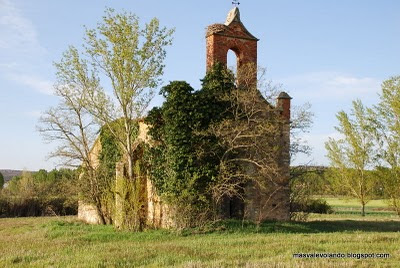
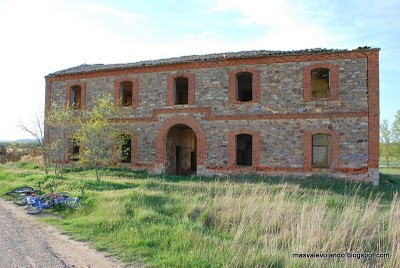
Unlike other monasteries disappeared in ancient times, its location offers no doubt, having maintained its activity practically until the twentieth century and still preserves the ruins of his small church and as a significant part of its dependencies.
Payment is in the middle of the fields that separate Santibáñez Vidriales and San Pedro de la Viña, in terms of the latter people, being known by locals as "The Convent." The site describes a gentle slope to meet with the stream of La Almucera, collector main river course of the entire region, with the bottom Carpurias Mountains dominate the skyline. Is roughly in the center of the valley, near the old Roman camp Petavonium in Rosinos of Vidriales. Would be located, therefore, beside the Roman road that linked Asturica Bracara Augusta Augusta, a road that during middle age would maintain some of its former vitality as a communications hub and route of the pilgrimage.

are not known with certainty what are the origins of this monastery. Its first mention comes from a diploma of the funds of the monastery of Sahagún 1100. By then, the monastery is now under the control of Alfonso VI, but the paper reports that had previously belonged to Count Munio Fernández, maybe its founder, with his known history back as much as the second half of the eleventh century .
The foundation was to be made on an old existing villa or farm known as the Villa Verde. It seems clear from the beginning the maintenance of the site was linked to the exploitation of this town, which was "do not know if even from a top-quota dependent peasants.
In this document the year 1100, Alfonso VI tells how to enjoy the possession of the monastery Munio Count Fernández, passed into the hands of the king, according to the custom of the kingdom because of the "arrogance" of the count, he did suffer exile. Should be therefore a very to use seizure at the time, the result of the so-called royal wrath. Fernández Munio not be confused with the eponymous tycoon regular diplomas in the late Leon X, and immersed in rebellion against the monarchy, in this case against the person of Vermudo II. The Munio Fernandez before us must have been a minor noble, he has left a scant paper trail. Gomez was married Aldonza, daughter of Count Gomez Diaz and Teresa Peláez, and sister of Elvira and Mayor Gomez, who also called his tombstone cometissa. Know of this marriage a daughter, Elvira Muniz.

Later, the king gave the monastery to his wife, Queen Bertha, which dealt with administration. But the queen died and buried in the monastery of Sahagun, the king gave it to the great Benedictine monastery, with whom he joined a close connection. The donation also included a provision on the solemn obligation of the new owners to provide thirteen poor resources to keep perpetually alive the memory of Alfonso VI and his late wife. Died
King, Countess Dona Aldonza, widow of Count Munio, claimed their rights over the small monastery of Queen Urraca. The queen, at the request of the Bishop of Leon had to act as mediator, acknowledged that his predecessor had been misinformed and considering legitimate their claims, returned the possession date not materialized. Shortly thereafter, in 1112, the Countess decided to deliver it, with all its rights and possessions to the monastery of Cluny and its abbot Pontius. Given the close ties between Cluny and Sahagun in the late eleventh century y principios del siglo XII, esta donación tiene más bien la apariencia de un compromiso que satisfaría a todas las partes implicadas en el asunto.

Con el tiempo Villaverde volvió de nuevo al control efectivo del monasterio de Sahagún, aunque no se cuenta con información sobre cuándo ni cómo. Es entonces cuando el cenobio debió adquirir la condición de priorato, uno más de la larga lista de filiaciones con que contaba el cenobio de la ribera del Cea. En cualquier caso, la vinculación entre Villaverde y Cluny debió mantenerse de alguna forma, bien fuera de una manera órganica o puramente nominal, pues incluso en el siglo XVI se sigue denominado the diplomas as San Salvador de Villaverde de Cluny.
Since the early fifteenth century monastery of San Salvador de Vidriales begins to enter the orbit of Pimentel. Initially, relations were limited to agreements or property transactions. For example, two parts of the priory: Valleluengo Sandín and are subject to change between the prior of Villaverde, Juan de Calzada and Don Rodrigo Alfonso Pimentel, II Conde de Benavente, formalized on March 26, 1428. In return, the monastery received an inheritance of five yugadas in Bercianos of Vidriales, a village in the jurisdiction of Benavente, which were obtained 35 loads of bread. Escalona
attributed to Don Rodrigo Pimentel, Count of Benavente by Sahagun delivery of the parcel of the priory, justifying it in the "troubles of Castile." According to him "this guy got up with him and their properties and rights that were quite remarkable." Isabel Rodrigo Beceiro assumed that this must correspond to the second holder of the county: Rodrigo Alfonso Pimentel, and not with the same name as the room could be implied, since this parcel is one of the assets of the third Earl Alfonso Pimentel. The rights of the priory included at this time "the padronadgo to present the benefits of e Minçereces Aguilar and Olmillos and Santa Marina Santisteuan Xamontes e Olmos who are in the diocese Astorga and other ecclesiastical revenues and benefits and always touo apresentar right to them. "

Allegations of abuses and usurpations prompted the beginning of a long dispute at the request of the monastery of Sahagún unleashed from 1478. The consequences of this process gave a totally new direction to the destination of the small priory.
is 1510 when Pope Julius II appointed prior to Juan Pimentel, who also enjoyed the parcel. Your name betrays its relatedness to the county family, apparently a nephew of Count V. This noble little priory took possession of the May 3, 1510 by Gonzalo de Magaz cleric, legal representative.
few days later, on May 8 of that year, Juan Pimentel himself, endorsing the office in a ceremony held at the monastery of Nogales. However, the monastery of Sahagún not give up and continued litigating against the Roman curia to defend their rights.
But in 1525 there was a decisive turning point which finally chose the subject to county interests. On that date Pope Clement VII Villaverde annexing the Priory of the Hospital de la Piedad de Benavente, recently founded by the V Conde, Alfonso Pimentel and his wife Anne of Hererra and Velasco. As evidenced by the papal document on Count V succeeded his relative, Juan Pimentel, that would make waiver of the parcel of it in the hands of Pope Clement VII and this in turn, by appeal of the Earl, sent him to add to Mercy Hospital. This union carried with it the obligation to maintain in the priory church two monks or secular priests to attend worship and daily Masses.
Sahagún protests just got to shake the line marked by Rome. Finally in 1544 the Roman curia to pronounce sentence in condemning the monastery of Sahagún to perpetual silence, and declared valid annexations. The monastery Leon was forced to pay 60 ducats and 4 gold florins by way of costs of prosecution. For its part, the hospital paid every fifteen years, in compensation for such aggregation, the contributions for the Holy See. Calf Book of Mercy Hospital of Benavente recorded in its accounts the entries for these expenditures. In the eighteenth century the lump sum, called quindenios, amounted to 2000 real, more real 460 in collection expenses and travel.

The history of San Salvador de Villaverde runs parallel since the Mercy Hospital. During the following centuries the priory continued to expand its assets in the valley of Vidriales. In the eighteenth century spread their income by Jamont places, Micereces, Valdez, Requejo of gunpowder, Vecilla, Mozar, Burgaña, Olmillos, Navianos, Aguilar, Abraveses, SITRAME, Hills, Granucillo, Granucillino, Cunquilla, Bercianos, Tardemázar, Santibanez of Vidriales, Calzada, Nail and Letrillas .
However, life was languishing in the small religious center. In 1752, mentioned the two chaplains who perform their duties in the House of the Priory ": Pedro Mateos and Jose Castillo. A mid-nineteenth century Madoz indicates briefly that he exercised the functions only two priests appointed by the Count of Benavente. This activity, almost vegetative, came holding up well into the twentieth century. The two religious
lived here with the only requirement to meet their religious obligations, mainly masses, following ancient tradition regulated by the Counts of Benavente. Also officiating religious services occasionally required by the locals. The activity should definitely be extinguished when the Hospital de la Piedad de Benavente became a retirement home, but the foundation that manages the property still retains ownership of the farm that is the Priory.
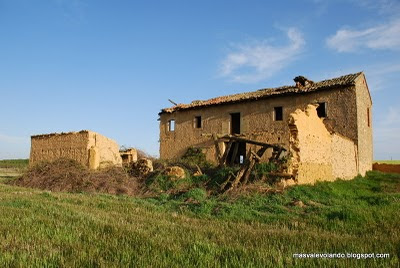
Images: 1. View house priory with a broken sarcophagus in the foreground, 2. Chapel 3. Main facade of the priory house, 4. Patio and auxiliary facilities 5. Interior of the chapel and 6. View of San Pedro de la Viña.
Images: 1. View house priory with a broken sarcophagus in the foreground, 2. Chapel 3. Main facade of the priory house, 4. Patio and auxiliary facilities 5. Interior of the chapel and 6. View of San Pedro de la Viña.


0 comments:
Post a Comment