Chronica Minora
As noted by the strict rules of protocol and etiquette, the English councils may, for historical reasons, official and treatment of Honor, very noble, very loyal, very illustrious, etc., Without thereby necessarily apply on their mayors or members of the municipal corporation.
In 1971 Benavente full City Council agreed to request the title of "Excellency." The application was accompanied by the appropriate documentation of their history, art and most important monuments.

were, in any case, difficult years for the exercise of any public activity, let alone of politics, even for a modest town "of provinces." Years that it was risky to combine the service and dedication to the neighbors with a certain independence from the pressures and guidelines of the scheme. Benavente
then lived with the aftermath of the era of "development", which had operated a profound transformation of English society although not without its contrasts and imbalances. A small town, the head of a large region of clear guidance farming and cattle city began to be hoped, therefore, to enjoy the services and infrastructure inherent in any urban center. Julian's step Cachón by the session coincided with this crucial moment and his work was oriented from the outset to lay the groundwork to enable this change. The truth is that, despite the dwindling coffers and not a few tripping, the benaventanos able to attend a profound transformation of the urban fabric. Renovated water supply and sewerage, paving of the streets spread to the neighborhoods of the city, street lighting was upgraded, opened the Parador de Turismo and launched the Regional Hospital. In the cultural section, highlight the first rematch of the History of Benavente Ledo del Pozo and start "for safekeeping" of the original scrolls of medieval privileges of the town.

The Full Council Benavente City, Province Zamora, based on the motion of the Mayor, agreed to ask the honorific of "Excellent" .- It goes without saying that such a distinction, for if granted, will lie in honor of the city, turned into Excellency to be governed by the City Council. So training and parts attached to the record attempt to ennoble the city in its meaning, history and monuments.
I
appropriate two previous determinations. First, the secular do Benavente villa is granted city status a little more than four decades. This category is for the first time under the relevant heading in Census 1930. The popular feeling is still not yet fully understood what city, because it still says "Benavente, good town, but bad people" and his natural reply no less scathing: "He who tells lies, if good is the villa, best people ".- Second, only from 1834, start date of the validity of our provincial division, Benavente appears as membership in the province of Zamora. Before, leading the party of his name, was broken in the province do Valladolid. With the annexation of the Partido de Benavente, the Party Sanabria also Valladolid, and the western portion of the suppressed province of Zamora Toro acquires its current facies and with area equal to the average of the English provinces.
The city granted a title or honorific should be based on exceptional circumstances of life management and current or past significant events. In the best and most indisputable cases are brought together both circumstances, playing at the same time presenting awards in geographical and historical authorities of a city. Whichever the esteem they deserve the honors awarded population entities or body building complex that reflects as they exist, should be offered not happily or without good reason, which alone, on the other hand, institutions may suffer population or deserved the councils that succeeded.

adequate justification for position on the request of Benavente references are necessary when the city itself in its geographical and historical aspects. Benavente remains vital and number of inhabitants in the capital of their province. Within the scope of this form in the small group of municipalities upstream, and thus without any hiatus until 1960. Is expressed by reference to other demographics of the province of Zamora the following data: In the 1961-1960 intercensal period of its 305 municipalities reduce population 264, over 87 100. In the remaining 13 per 100 includes Benavente. The village and town of Benavente since the beginning of the century to the Census of 4959 goes into effect at 11,779 inhabitants. Representing an increase by 137 100, does that mean that the term of seventy years has considerably more than doubled its population. This demographic picture of happiness has only had a small break in the years 1961-1965, in which five starts decline in the number of inhabitants of Benavente, crisis, fortunately, saved widely in the second half of the intercensal 1961-1970. Benavente development giant, accused the peak between the years 1941 to 1950, due to a foothold in the industrial city, the birth of factories in the most different classes. This, of course, impacted on the plane or the linear progress of the city along major access routes do. But the good sense of its people, allied with their munícipes, has served to marginalize, in suitable areas, the dominance of iron and cement pretentious buildings, and to maintain the appearance and austere Castilian typically shoot in the city, demonstrated zeal for the ruined walls or fences and monuments whole of the past still preserved. Without prejudice to the common background models Castilian villages, Benavente, in the words of Archilla-Vigil, "is a strangely harmonious synthesis and humid and fertile orchards with ancient Romanesque and Mudejar rural flavor. It suggests a peculiar stamp Moorish east, at the same time, the old medieval irrigation and impose its hallmark in the brick buildings. "

With respect to its past, more or less remote, you can remember what follows .- Benavente, according to Gómez Moreno, corresponds to where Brigecium Roman. No record of him in the "Itinerary Adnotata "Antoninus Caracalla and restored by Miller wisely sector of" Itineraria Picta "of Castorius, commonly called" Taula Peutingeriana. " The old Benavente was crossed by important Roman road which went from Zaragoza to Astorga, the call for Fernández Casado Track Transversal del Duero. " Their scales between the initial and terminal points were: Allabone (Alagón) Turiaso (Tarazona), Numancia, Uxama (Osma), Clunia (Coruña del Conde), Rauda (Roa), Palencia, Intercacia (Villalpando) and Brigecium (Benavente) . In the Middle Ages is very likely that the strategic desert north of the Duero, consistent with the Moorish invasion Benavente affected and extensive outline. In the anguish of his abandonment almost joins the tense fear of the depredations of Mansur, conducted military incursions in the area NW of Spain .- Benavente enjoys great prosperity in the time of King Ferdinand II of León (1157-1988) . Which repopulated the villa gives his heart, begins the fence or wall, and the churches of Santa Maria do Azoque y San Juan del Mercado. Both churches, famous monuments Benavente, "took a little" (Gómez Moreno) of the Cistercian Moreruela. Cortes Fernando II held in Benavente, and here died in 1188 .- In the time of his successor, Alfonso IX (1188-1230), who both like to stay in the castle-fortress Benavente continued prosperity of the town, again helped by the holding of parliament in 1202. When he died Alfonso IX of Leon leaves the kingdom to his daughters Dona Dona Sancha and Dulce. data in Benavente and sign the agreement (1230) of the same name, which the queen Dona Dona Sancha and Dulce resign by flood damages, inherited the crown in favor of brother Ferdinand III of Castile Enrique .- Benavente Trastamara II gave the duchy to his title Fadrique bastard. In the days of the first Duke of Benavente the town is besieged by the Portuguese, the square held out for more than two months the tight encirclement. The heroic conduct of the besieged was awarded by King John I to privilege of tax exemption, at the same time, he founded the monastery of Santa Clara within its walls. For defection Fadrique was arrested by order of Henry III and died on the strength of Almodóvar, with Córdoba .-

In 1398 the lordship of Benavente, as head of the county of the same name, passed Don Alonso de Pimentel. During the years of Count IV, Rodrigo Alonso, Benavente reaches its peak. Rodrigo Alonso was favored first by Enriqne IV, who appointed him Duke, and then by the Catholic Kings, who bravely helped. By the time the annexation to the Duchy Puebla Sanabria and Carballeda Earth. Benavente continued prosperity of the fifth duke, who built the tower called the Caracol, in the first half of the sixteenth century. The Duke of Benavente was called one of the series of the grandees of Spain, founded by Emperor Charles V as the highest ranking noble .- In advance of the centuries, the villa still standing secular institution in it enough for mirroring , more or less intensity, Main bygone occur of Castile and Spain .- Because of its importance, not surprising that the Division josefina and frustrated Prefectural Spain (1810) appears as head ds subprefecture Benavente, constituting, with Astorga and León, Astorga Prefecture.

In 1398 the lordship of Benavente, as head of the county of the same name, passed Don Alonso de Pimentel. During the years of Count IV, Rodrigo Alonso, Benavente reaches its peak. Rodrigo Alonso was favored first by Enriqne IV, who appointed him Duke, and then by the Catholic Kings, who bravely helped. By the time the annexation to the Duchy Puebla Sanabria and Carballeda Earth. Benavente continued prosperity of the fifth duke, who built the tower called the Caracol, in the first half of the sixteenth century. The Duke of Benavente was called one of the series of the grandees of Spain, founded by Emperor Charles V as the highest ranking noble .- In advance of the centuries, the villa still standing secular institution in it enough for mirroring , more or less intensity, Main bygone occur of Castile and Spain .- Because of its importance, not surprising that the Division josefina and frustrated Prefectural Spain (1810) appears as head ds subprefecture Benavente, constituting, with Astorga and León, Astorga Prefecture.
As such, it can be inferred that the geographical reality of Benavente, though prosperous, it has no singular extraordinary merit or potential estimate. Is one of many places of Castile recently launched industrial life, with abundant experience, lovingly cared for in bygone days.
More 
worth, however, some historical circumstances in the small town in question. It should choose between those, the aforementioned agreement, which made possible the peaceful and definitive union of Castile and the kingdom of León, which means a first important step in the unification of Spain, not conclusive enough 1512. This alone, quite apart from other valuable facts sufficient to justify the request and desire of the City of Benavente. Furthermore, the granting of such an honor can serve as a stimulus to increase the voltage to a convenient point of city life Zamora.
estimated the undersigned to grant this request for this report, the appeal of the title of "Excellent" in the city of Benavente. The Academy shall, as always, the most convenient.
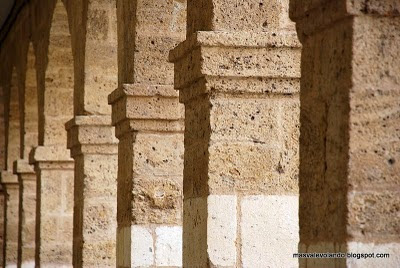
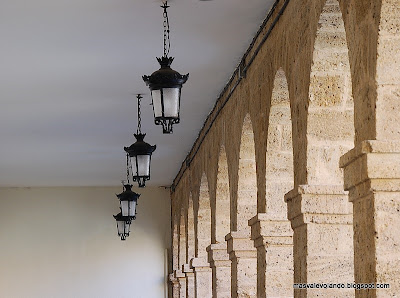
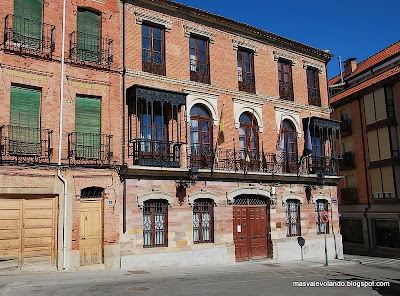
Images: 1. The Plaza Mayor and the City on a postcard of early twentieth century, 2, 3, 4 and 5. Various details of the old building of City Hall, 6. Casa de los Rodríguez, current City Council offices.
Images: 1. The Plaza Mayor and the City on a postcard of early twentieth century, 2, 3, 4 and 5. Various details of the old building of City Hall, 6. Casa de los Rodríguez, current City Council offices.


